

The National, Neighborly Guard: Leaders In Decorum, Compassion & Community Safety
Written January 29, 2026
Over the last year, both the U.S. military, under the Department of Defense (DoD), and federal law enforcement agencies, under the Department of Homeland Security (DHS), have been mobilized across the country, in seemingly new ways. Most Americans want to stay properly informed and aware of what is happening across the country – and why armed troops and federal law enforcement agencies are in our neighborhoods. But the headlines, discourse, and ever-changing state and federal orders, along with the authorities that enable these mobilizations, have made it difficult for us to keep track of what’s actually going on.
As this presence of armed, uniformed personnel persists in our cities, it is important that we understand the National Guard’s role, missions, and authorities, and distinguish them from other organizations operating in these areas.
National Guard
The National Guard has a dual federal-state mission. Under normal circumstances, each state's National Guard operates under the authority of that state’s governor and is funded partly by the state. States’ governors can activate their state’s National Guard for state emergencies, such as natural disasters or civil unrest. The National Guard can also be activated for federal service under Title 10 and activated for state service but funded by the federal government under Title 32 of the US Code. With limited exceptions, the National Guard is only under federal command when activated under Title 10¹, and then operates under the DOD through the Department of the Army and Department of the Air Force.
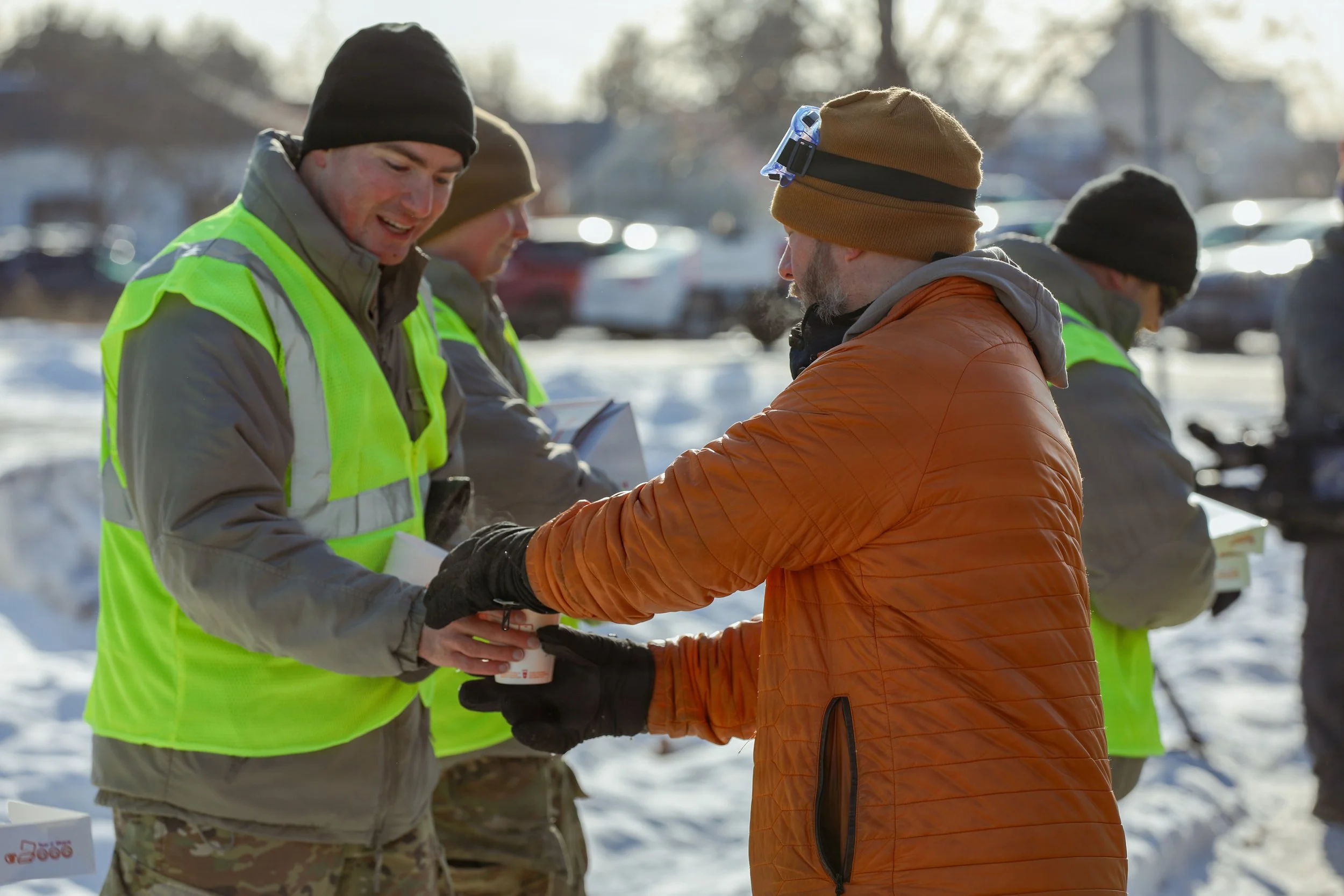
The Mission of the National Guard is therefore quite broad. However, a core element is to “protect life and property in our communities.” Historically, the Guard has served American communities and neighboring countries through acts of service, to include supporting road safety, keeping polling centers safe and secure during election seasons in their home states, providing disaster recovery relief and, as recently as January 26, supporting Minnesotans weathering intense winter conditions to exercise their freedoms under the First Amendment by handing out coffee and donuts.
While there is historical precedent for the Guard to be deployed to respond to civil unrest in American cities, it is rare (dozens of times in the past sixty years, typically under state control), and activations for this purpose under federal command are even rarer (fewer than 10 in the past sixty years). Over the past year, however, we have seen federalized National Guard units deployed to American cities with significantly greater frequency, including to Washington, D.C., Los Angeles, Chicago², Portland, and Memphis³. The Guard’s need and mission in many of these deployments have been rightfully questioned by Americans, especially where the Guard has been federalized against the wishes of local officials. But in each case, Guard personnel have conducted themselves in accordance with the high standards and expectations our country and communities place on them, and which they place on themselves. Minnesota has now activated its state National Guard forces to Minneapolis (discussed more below). U.S. Immigration and Customs Enforcement (ICE) and U.S. Customs and Border Protection (CBP) agents under DHS have also been present in these cities over a similar period of time, making it often difficult and stressful for citizens to know who is in their cities, and why.
Who serves in the National Guard?
National Guard members are deeply rooted in their communities and often serve close to home (unless federalized by the President, and then they can be deployed across state lines or internationally).
Every member of the National Guard completes months of military training, and many have previously served on active duty before choosing to continue service in their home states.
When deployed, National Guard members operate in clearly identifiable ways:
They generally do not wear masks except in limited, weather-related or protective situations;
They primarily travel in marked, tactical military vehicles, such as Humvees, LMTVs, or MRAPs; and
They wear the same utility uniforms as active-duty Army and Air Force personnel. In recent activations, including in Minnesota, they have worn additional visible identifiers, such as reflective vests.
The Minnesota National Guard recently declared that its members “live, work, and serve in our state, and are focused on protecting life, preserving property, and ensuring Minnesotans can safely exercise their First Amendment rights.”
How are ICE and CBP Different?
ICE and CBP are federal agencies within the Department of Homeland Security. The President sometimes calls upon the National Guard and active duty military to support DHS operations, but follow different mission sets and standards in large part because of the Posse Comitatus Act, which generally prohibits federal military from conducting direct, active law enforcement activities unless an exception applies (e.g., Insurrection Act, express Congressional authorization, federal property protection). ICE and CBP agents have been observed in cities across the U.S. wearing tactical gear and camouflage uniforms but with limited or no visible identifiers, and, most times, using face coverings such as masks, sunglasses, balaclavas, and hats while often refusing to identify themselves or the particular agency they are affiliated with. This contrasts with typical practices of local and state police, where officers wear visible badge numbers, and National Guard units, which wear standardized uniforms and insignia including name tapes. Further, recent federal immigration operations have been documented using unmarked vehicles to carry out their operations.
How to Stay Best Informed
National Guard units are primarily mobilized in-state to protect their state-specific communities. When they are federalized and deployed across states and internationally, following specific National Guard units and their verified social media pages online is a great way to stay best informed about their activities, in addition to local news outlets reporting from their communities on the ground.
At the time of this publication, verified social media accounts for National Guard units either recently, currently, or rumored to be deployed to their states include:
and follow The National Guard for updates across all states.
Further, continuing to trust and support veteran and military service organizations as well as veteran and military media and journalism outlets will keep you informed, such as:
Veterans for All Voters – take the #OathChallenge
As a nonpartisan nonprofit organization founded and led by military veterans and spouses, We the Veterans & Military Families feels called to remind servicemembers and Americans who we are as a country, and the oath that our community has taken to this nation, the Constitution, and its people. We have every expectation that our Guard personnel will continue to serve with distinction and make our nation and their local communities proud.
We call on our elected officials to responsibly consider any activation of the National Guard, and to do so only in keeping with the Constitution, our national values, and with due deference to the respective state’s elected leadership.
Notes:
Most notably, the District of Columbia National Guard is always under presidential control despite not being a Title 10 force, and dual-status commanders may exercise simultaneous state and federal authority over different forces without transferring command. Federal funding, coordination, or mission direction under Title 32 does not constitute federal command absent Title 10 federalization.
National Guard members from Texas and Illinois were mobilized, with some stationed near an ICE facility tied to the protests; however, a federal judge blocked the planned deployment before it could be executed.
While President Trump announced a plan to send the National Guard to Memphis as part of a federal task force alongside federal law enforcement, the actual directive focused on coordination with the Tennessee Guard, was framed under Title 32, and relied on the Governor to order troops into the city.