

When Headlines Break, Scammers Strike: How the Military Community Can Stay Digitally Vigilant
Written March 20, 2026

Moments of global uncertainty often bring out the best in our community – service, compassion, coming together, and stepping up for others. Unfortunately, these moments also bring out the worst in foreign adversaries, scammers, and other bad actors online.
As tensions in the Middle East have dominated headlines, reports have surfaced of scammers specifically targeting the veteran and military family community with fraudulent schemes and impersonation attempts. Our Executive Director, Ellen Gustafson, recently spoke with WAVY-TV 10, a local news outlet in Norfolk, Virginia on these increased threats to our community and the growing trend of online bad actors exploiting current events such as these to deceive military families and veterans online. These actors intentionally prey on trust within the military community and on the emotional impact of breaking news and conflict to trick and steal from Americans.
This pattern is not new – but it is becoming more sophisticated.
Bad actors online frequently exploit major global events to make scams feel timely and credible. Researchers and cybersecurity experts consistently see fraud campaigns tied to geopolitical conflicts, natural disasters, or other crises because heightened emotions. and rapidly evolving news create ideal conditions for manipulation and exploitation – for example, the surge in insurance-related scams following the Los Angeles wildfires in 2025 and recent fraudulent schemes tied to proposed VA benefit changes.
For our community of veterans and military family members – a group built on trust, service, and real-world experience – this makes digital vigilance more important than ever.
WHY and HOW are Veterans & Military Families Targeted Online?
Scammers target the veteran and military family community for several reasons:
WHY – High Public Trust and High-Value Benefits: Veterans and military families are among the most trusted and respected members of American society. That well-earned reputation is a double-edged sword. Bad actors deliberately exploit the goodwill and credibility our community carries, using it to manipulate veterans into lowering their guard. But the targeting doesn't stop at reputation – veterans are also recipients of significant government benefits, including disability compensation, pension payments, education assistance, and healthcare coverage. This combination of social trust and consistent government funding makes veterans especially attractive targets for scammers looking to steal money, benefits, and personal information. The more resilient our community becomes against scams, fraud, and online manipulation, the harder it is for bad actors to succeed – and the stronger America becomes as a result.
HOW – Exploiting Social Media to Scam Veterans: One common way bad actors target veterans and military families is through fake job advertisements on social media platforms like Facebook. Image 1 below shows three real examples of job ads that appeared on Facebook but were linked to foreign IP addresses and were not posted by legitimate recruiters. Their goal is to lure users into clicking the links and sharing personal – or even financial – information. This is a widespread problem: a recent investigative report by Reuters found that Meta internally projected that roughly 10% of its 2024 revenue would come from scam ads, with an estimated 15 billion scam ads shown to users across its platforms every day. While Meta says it is working to address the issue, our Homefront Sentinel team continues to identify new scam ads regularly targeting the military and veteran community.
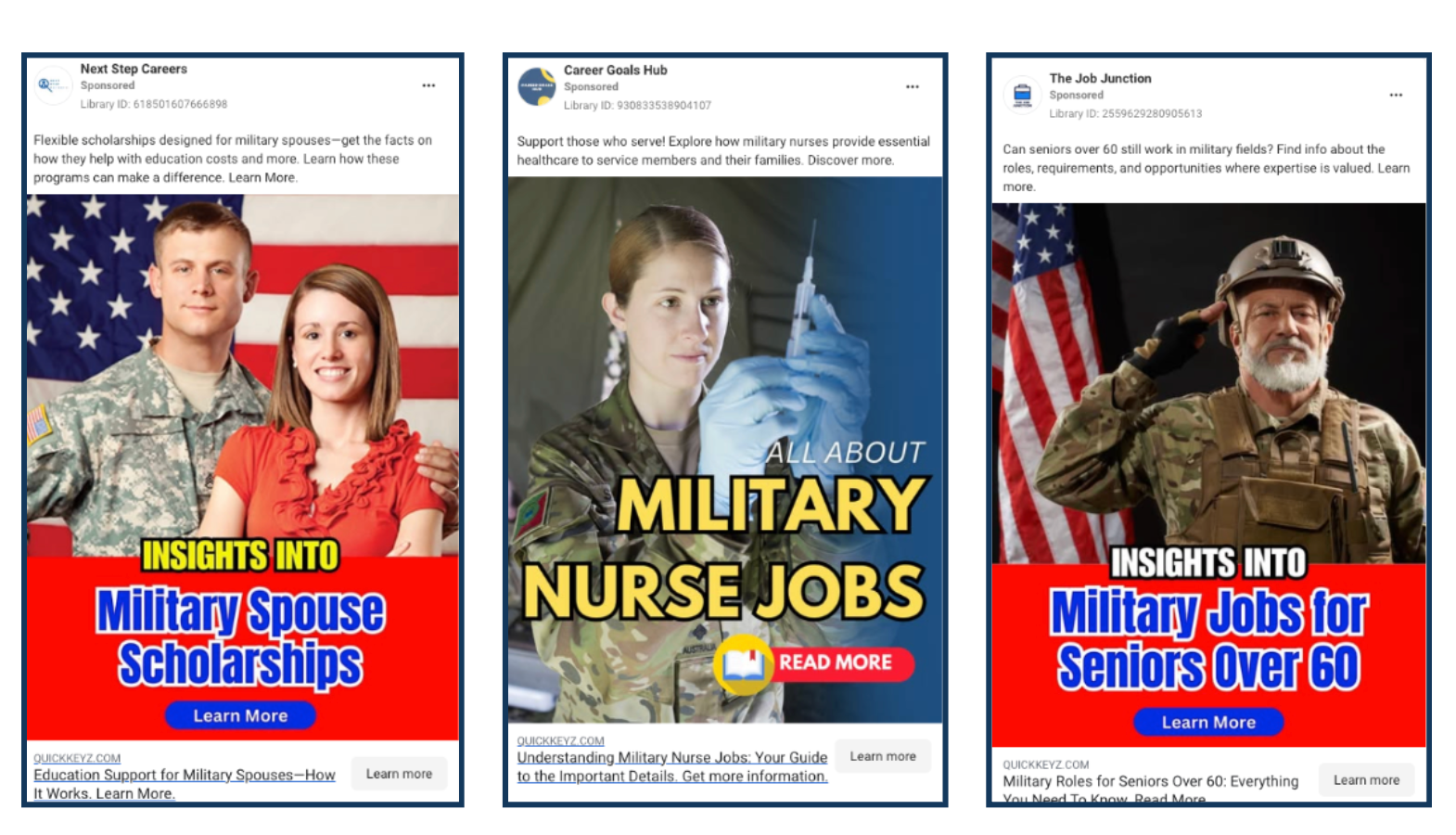
Image 1: Screenshots of a network of Facebook pages run by users with foreign IP addresses that posted fake job advertisements for American veteran and military family members to steal their personal data. Content captured by the Homefront Sentinel team.
WHY – Strong Community Networks: Military families rely on trusted networks – veteran and military service and engagement organizations, social media communities, military unit communities. Fraudsters exploit this by impersonating trusted voices, to include member-based veteran and military service organizations (VSOs and MSOs), high-ranking military officials, and even verified military social media pages.
HOW – Impersonating Trusted Members of VMF Community Networks: As shown in Image 2 below, scammers targeting the VMF community often watch posts from legitimate, verified military accounts – like the United States Air Force Facebook page (screenshotted account on the left below). They then create fake accounts impersonating senior military leaders and repost that same content to appear credible. Once people believe these accounts are legitimate, scammers begin reaching out directly to users and attempting to trick them into sharing personal, professional, or financial information.
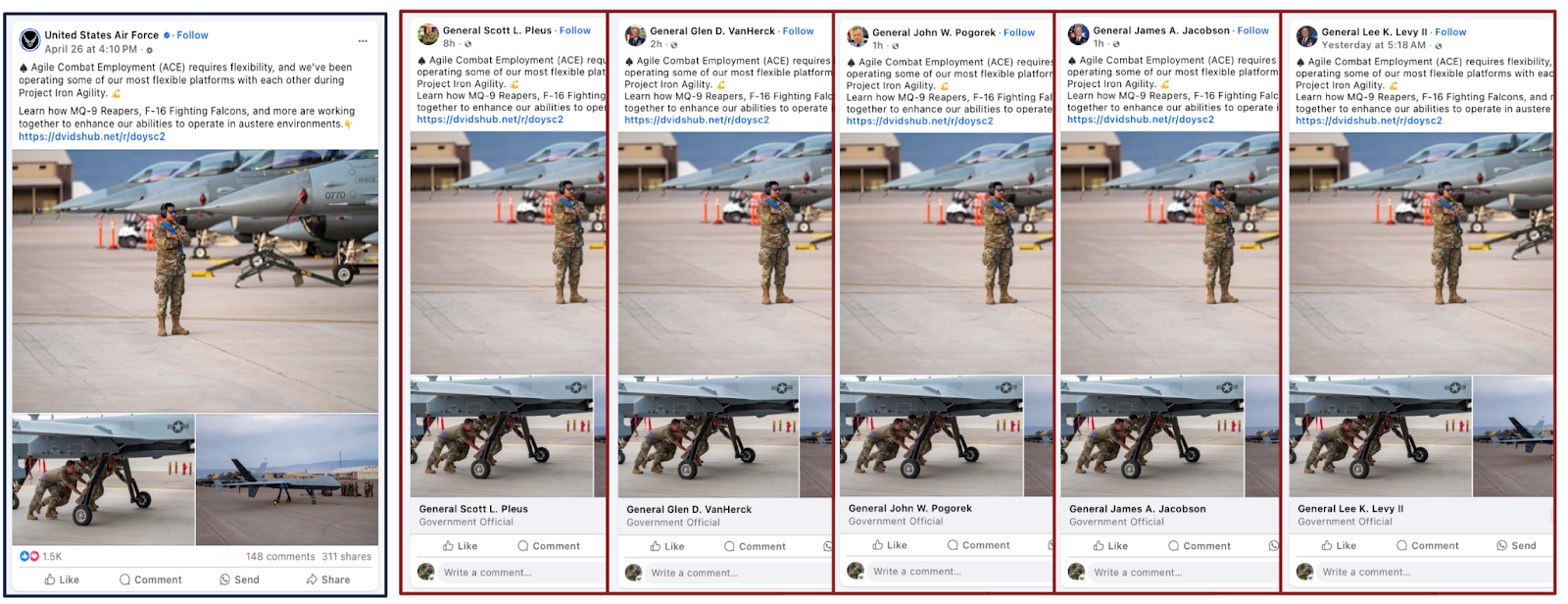
Image 2: A collection of fake social media accounts impersonating U.S. military generals and reposting content from the official United States Air Force Facebook page to appear credible and legitimate. Content captured by the Homefront Sentinel team.
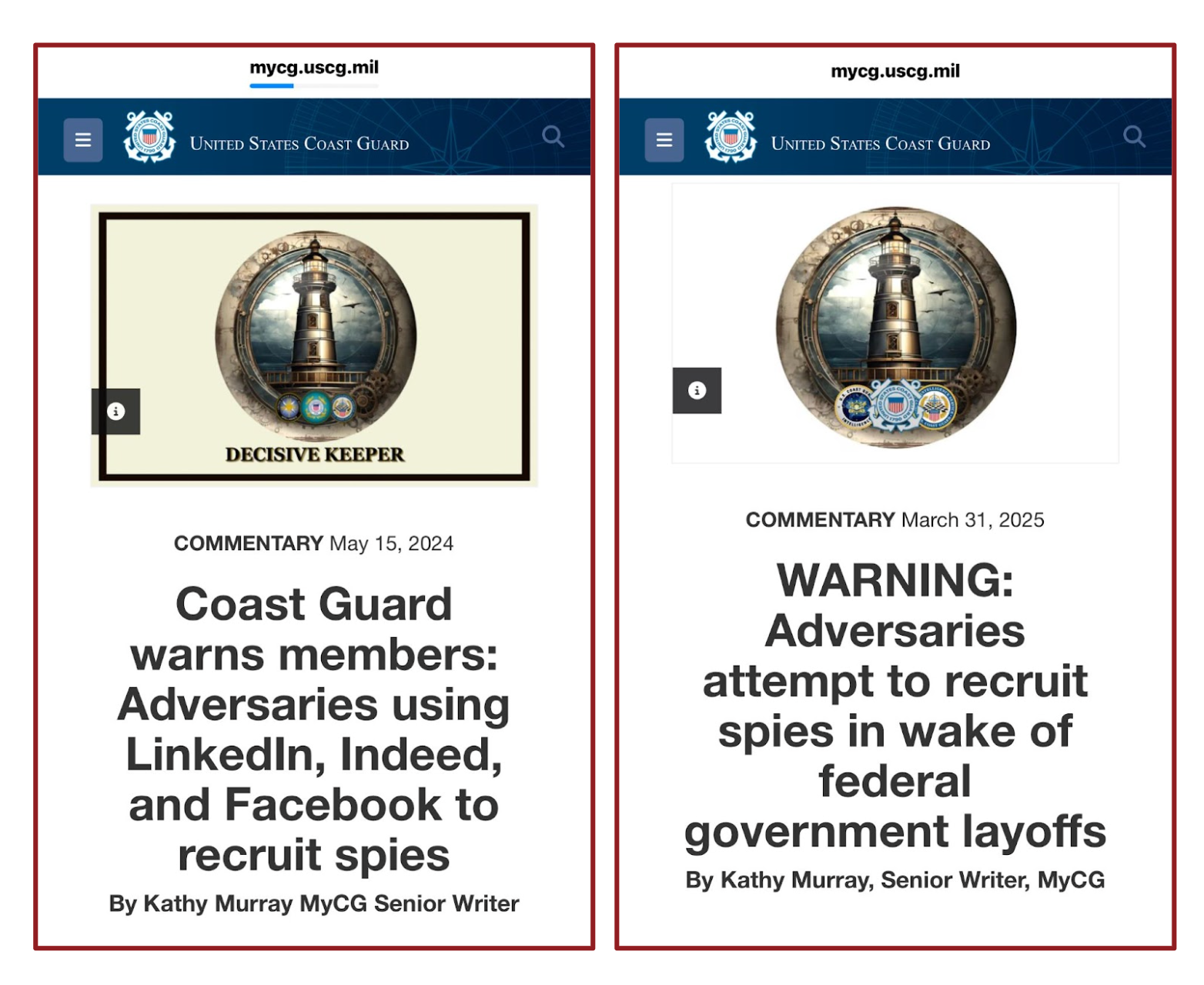
WHY – National Security Training & Expertise: Veterans don't leave their knowledge at the door when they transition out of service – and our foreign adversaries know it. Agents from countries like Russia, Iran, and China actively target veterans and those with security clearances, hoping to get their hands on sensitive information about U.S. national security interests. They scout social media platforms looking for members of our community who may be struggling financially or frustrated with their transition, using fake job offers and flattery to reel them in (see Image 3 below). Simply put, the same expertise that made you valuable in uniform makes you a target in civilian life. The more aware and vigilant our community stays against these threats, the harder it becomes for our adversaries to succeed – and the safer our nation remains.
HOW – Targeting VMF Profiles on Social Media Job Sites: Bad actors posing as recruiters on platforms like LinkedIn often target veterans and military family members based on the information listed in their profiles. For example, if a former U.S. Army Military Intelligence officer includes their service background, scammers – or even foreign adversaries – may try to connect under the guise of a job opportunity. Their goal could be to steal personal or financial information, exploit military benefits, or in some cases attempt to gather sensitive information (see Image 3 below for recent examples reported on by the U.S. Coast Guard Counterintelligence Service).
What Tactics Do Bad Actors Use Against Veterans & Military Families?
There are several types of scams that are frequently identified and reported on as impacting the veteran and military family community:
Impersonation scams: Scammers may pose as veterans organizations or even fellow veterans requesting help or donations.
Benefits or policy scams: Fraudulent messages and posts may claim urgent changes or scam opportunities regarding VA benefits, TRICARE, or military pay to trick recipients into sharing personal or banking information.
Phishing calls, emails, or text messages: messages may impersonate government agencies, veterans organizations, or banks and attempt to capture login credentials or personal data.
Don’t Fall For Red Flags Online
While scams and scammers’ tactics may evolve with advancements in technology, the “red flags” to look out for are relatively consistent.
Red Flags to Watch For:
Messages conveying urgency and/or demanding immediate action
Requests for personal information or financial assistance
Messages referencing breaking news or conflicts to create a sense of urgency
Suspicious or unexpected links and attachments
Accounts impersonating service members with little online history
Payment requests via gift cards, cryptocurrency, or wire transfer
If something feels off, trust your instincts.
Ways to Stay Vigilant Online
Protecting yourself and your loved ones online does not require advanced cybersecurity training – just consistent habits.
Verify before you trust – If someone claims to represent a military organization, charity, or government agency, confirm through official websites or phone numbers before responding.
Be cautious with breaking news – Scammers frequently attach their schemes to major headlines. Treat unsolicited messages referencing current events with extra skepticism.
Protect your personal information – Never share Social Security numbers, login credentials, or financial information through email, text, or social media messages.
Strengthen your digital security – Use strong passwords, enable multi-factor authentication, and keep devices and app softwares up to date.
Talk about scams openly – One of the best defenses is community awareness. If you encounter a scam, share it with your network so others know what to watch out for.
The veteran and military family community has always been strongest when we look out for one another and lead as examples for our fellow Americans. That responsibility extends to the digital space. Bad actors want our community to be distracted, emotional, and careless online. With better awareness and vigilance, we can deny them that opportunity and do less of our foreign adversaries’ bidding for them.
Staying informed, questioning suspicious messages, and protecting personal information are simple steps that help safeguard not only ourselves, but our families, veteran and military family community members, and fellow citizens – because in today’s environment, digital vigilance is part of community security.